
A Tradition of Making
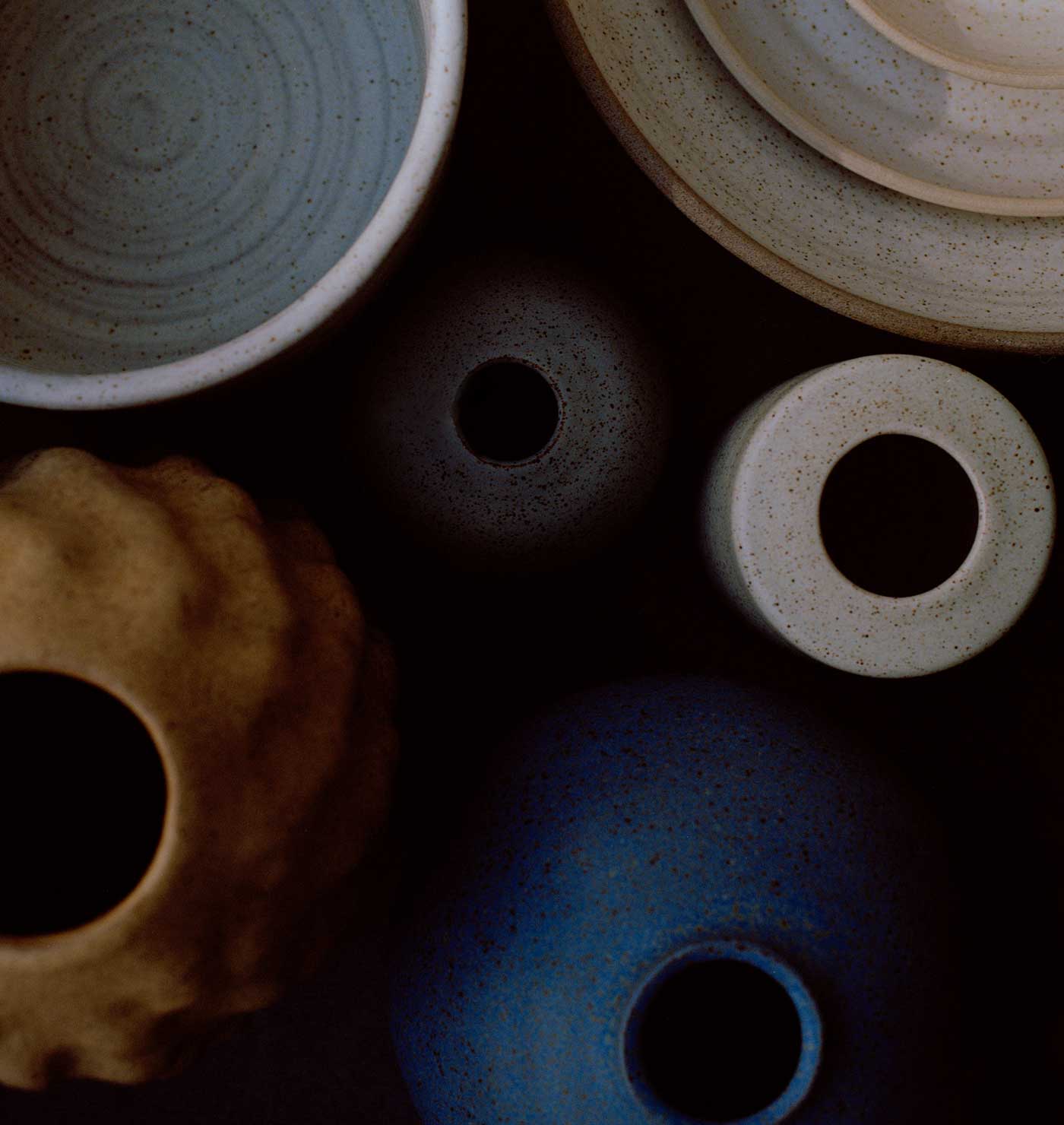
There are more than 40 years of working with clay in Hans Bo’s hands.
His daughter, Stinne Bo Tyrrestrup, found her own path through design and art. Together, their different ways of creating have shaped TYBO since its beginnings in 2015: Stinne bringing ideas, designs and a clear visual direction, and Hans bringing a lifetime of knowledge about clay and what it can do.
But their shared story of making goes back another generation.
Creativity runs in the family
Hans grew up with pottery too. His mother, Stinne’s grandmother, had her own pottery workshop and shop, but her creativity extended beyond clay. She also painted and drew.
Making was equally present throughout Stinne’s childhood. Her father had his pottery workshop, her mother is a visual artist, and other members of the family painted and drew.
For Stinne, creativity was simply part of everyday life.
She drew and made things from an early age, spending hours absorbed in creative projects. Eventually, that curiosity led her to study design at the Royal Danish Academy and to develop an artistic practice of her own.
Yet carrying a family tradition forward comes with a certain humility.
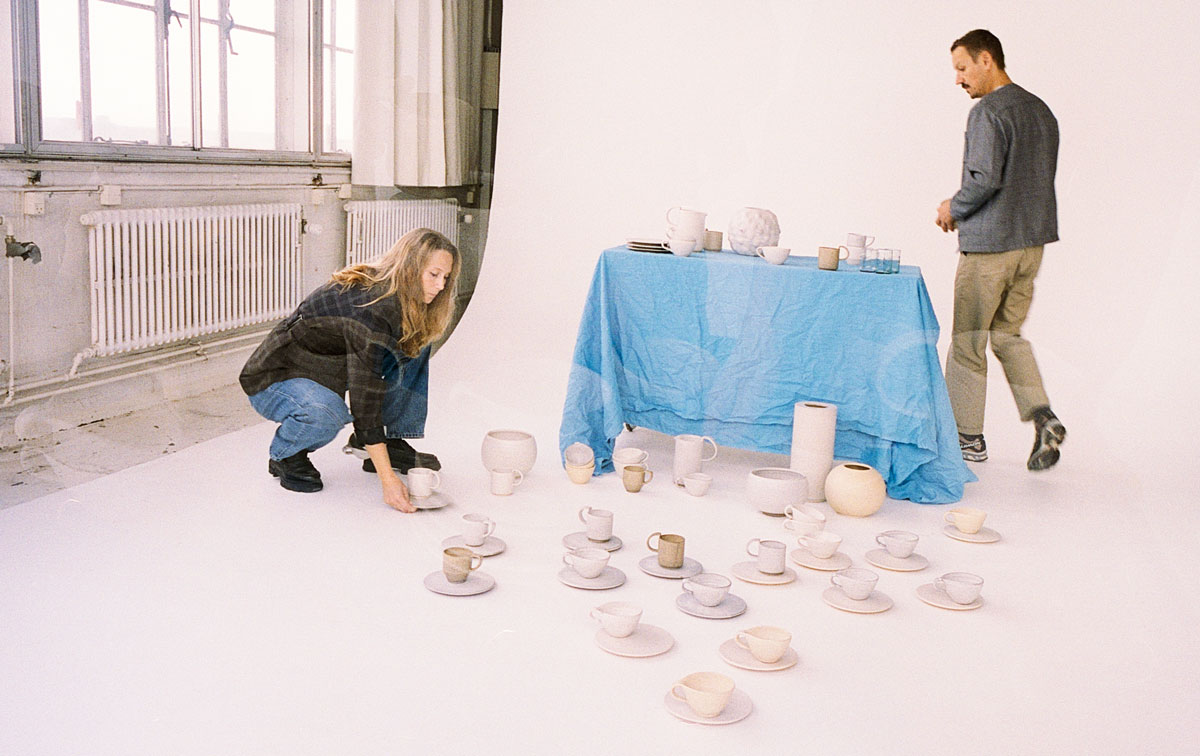
“My grandmother and my father are potters. I am a designer. I can throw clay, but I no longer produce the ceramics myself. It is important to me that TYBO continues in the spirit of the family and with a love and respect for the craft, but I also have to do it in my own way.”
For Stinne, continuing the tradition has never meant making the same things in the same way. Taste changes between generations, and so should the expression. What remains is the respect for the craft and the tradition of hand-thrown stoneware.
The work behind an object
Working with clay takes time.
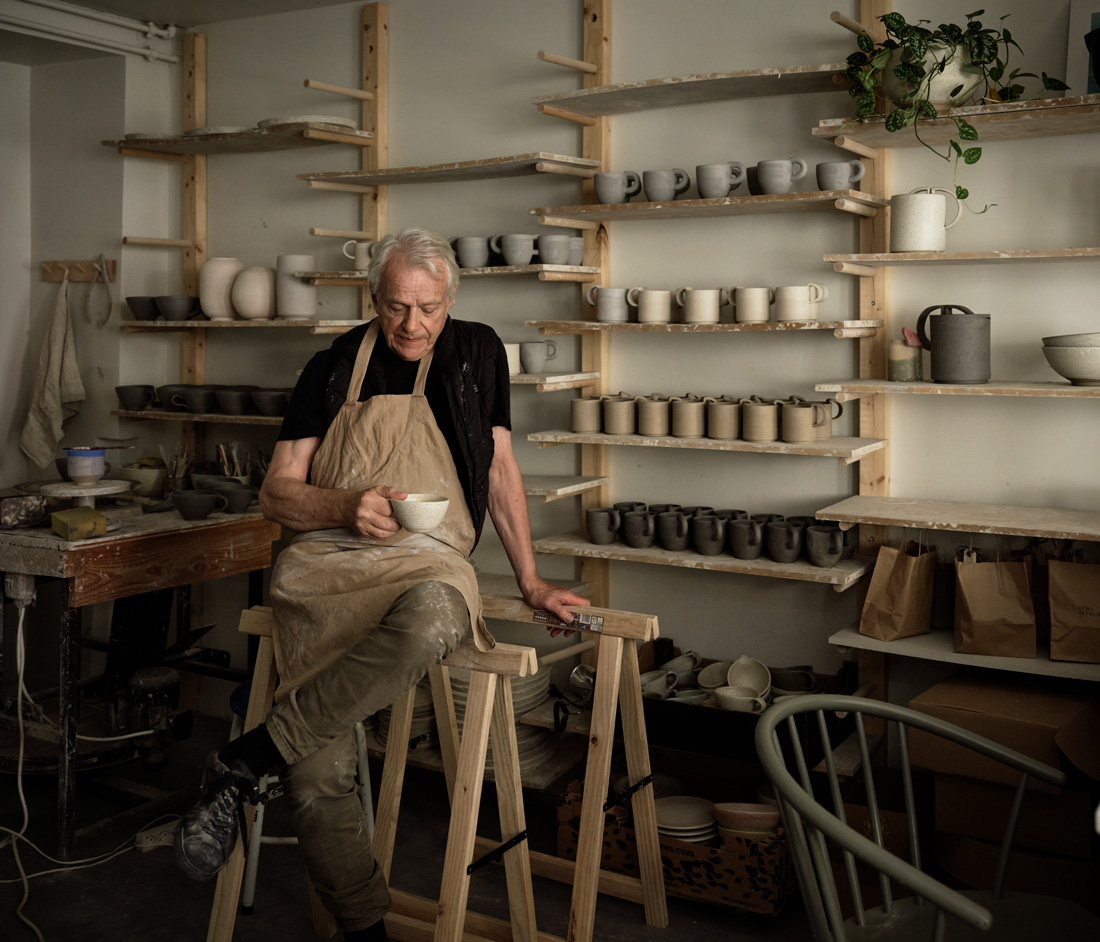
Before a piece reaches the shelf, it has been handled again and again. The clay is prepared and thrown, the form is trimmed, fired, glazed, fired once more, and carefully finished.
Each stage leaves its own small trace. No two pieces become completely identical.
For Stinne, however, good craftsmanship is about more than the process itself. An object needs to be thoroughly considered before it reaches the shelf.
A cup should have the right proportions. It should sit comfortably in the hand and feel right when brought to the mouth. Beauty and function belong together.
The hope is to create objects that can stay with someone for many years, perhaps even long enough to be passed on.
Different materials, the same curiosity
While clay became Hans’s material, Stinne eventually found hers in paper.
During her studies at the Royal Danish Academy, she began looking for a way to bring more depth and dimension into her drawings. She started cutting into the paper and building the drawings in layers, gradually developing the technique into the sculptural paper works she creates today.
Years of experimenting have continued to open new possibilities: different colours, formats, motifs, and techniques.
In many ways, the process is not so different from Hans’s relationship with clay.
Both return to their materials again and again. Both are persistent. Both refine through repetition and remain curious about where the next idea might lead.
“I think we are equally dedicated to what we do. We both love what we work with, and the love of creating is what drives us.”
Hans often says that his mother would have been proud to see what the family has created with TYBO.
Stinne thinks she might have recognised something familiar in it too. Her grandmother was a potter, but she also painted and drew. Like Stinne, she moved between craft and art rather than defining herself through a single material.
Perhaps the family inheritance was never only about clay. Perhaps it was always about making.